







Heel cracks are caused by a combination of dry skin, calluses, and repeated pressure on the heel. The skin on the sole of the foot has no sebaceous glands to produce oil, which makes the heels more prone to dryness. Dry skin lacks elasticity, and a callused rim around the heel is even stiffer. For heel cracks to heal, the skin must be softened and the tension reduced.
The three parts
There are three main factors that contribute to the development of cracked heels: dryness, calluses, and pressure on the foot. Most often, it is a combination of these three that causes the skin around the heels to crack.
Dryness
Unlike many other parts of the body, the soles of the feet have no sebaceous glands, and without them, the skin cannot moisturize itself. This means that the soles of the feet and the heels tend to become drier than the rest of the body. Dry indoor air during the winter and excessive showering can also lead to drier skin. Dry skin is less elastic, which makes it harder for the skin to stretch when weight is placed on the foot.
Callus
Calluses on the soles of the feet are really just a response to the pressure they’re subjected to from repeated strain. By building up a thicker layer of stratum corneum—the outermost layer of the epidermis—a callus forms that acts as a protective barrier. The problem is that callused skin is stiff and doesn’t move with the foot.
Press against the foot
When we stand, walk, or run, the heel pad is compressed from the sides. If the skin around the heel is stiff and dry, it can crack. In the summer, when we wear shoes with open backs or walk barefoot, the problem can get worse because the heel pad is not supported from the sides.
Other factors that can also contribute to or worsen heel cracks include being overweight and standing for long periods on hard surfaces. There are also some medical conditions that can affect skin dryness, such as diabetes or an underactive thyroid.
How to Break the Chain
For heel cracks to heal, you need to provide the skin around your foot with the right conditions. The most important thing is to find a routine that you can actually stick to.
Moisturize your feet every day, not just when they get cracked. Since the skin on the soles of your feet has no sebaceous glands and cannot moisturize itself, you need to moisturize your feet every day, especially in problem areas such as the heels.
It’s best to apply the cream to warm, clean skin. After you’ve showered or taken a foot bath, your skin is at its softest and therefore perfect for applying the cream. Be sure to dry your feet thoroughly before applying the cream, though. If you’re a morning showerer, you can apply the cream before putting on your socks, or simply apply it to your feet before bedtime.
Put on socks afterward. Once you've applied the product to your feet, you want it to stay on your skin and take effect, so put on socks afterward to keep the product from ending up on the floor if you get up and walk around.
File your feet gently, not aggressively. Filing your feet removes calluses, which helps the product you apply to penetrate the skin. But it’s important not to file too much, because then there’s a risk that your skin will respond by developing even more calluses. Light filing on dry skin once a week is enough.
Take a look at your shoes. Frequent use of open-back shoes or thin soles on hard surfaces are two common causes of cracked heels. Open-back shoes prevent the heel pad from staying in place, and thin soles can put more strain on the heel.
Use a product that stays on the skin. There are many different foot creams to choose from. Keep in mind that a water-based product evaporates quickly, while a wax-based emollient stays on the skin longer, giving it a chance to heal. Many of the options available at pharmacies contain urea, which helps lock in moisture and soften the skin, as well as salicylic acid, which dissolves calluses. These can also be effective against cracked heels.
No matter which product you use, one of the most important steps is to actually moisturize your skin every day. So be sure to choose a product that’s easy and convenient to use every day and that can become part of your daily routine.
When You Should Seek Medical Care
You should seek medical care if you have cracks on your feet that bleed, are deep and painful, become red and warm around the edges, ooze fluid, or develop yellowish scabs, as these may be signs of infection. If you have diabetes, you should not treat foot problems on your own; reduced sensation and impaired blood circulation mean that sores on your feet may be more serious than they appear. Always contact your podiatrist or diabetes clinic first.
Voice of the customers
Many people who have had problems with cracked heels say they have tried several different ways to solve the problem. Here are some experiences from customers:
"I washed my feet, dried them thoroughly, and applied the foot cream all over my feet, paying special attention to my cracked heels. I put on socks and was a little surprised when my feet stayed pleasantly warm all day long. My cracked heels healed in a few days with similar treatment every day or every other day. I am SO GRATEFUL!!!"
"I've been using the foot pen for a few days and my feet are crack-free. I'm actually surprised at how quickly they healed."
"It's so wonderful to moisturize my feet every night without getting my hands sticky. Just the right amount—a couple of swipes over my heels and the balls of my feet."
"I try using other products, but they get messy. Since this one isn't messy, I've been using it more often, and it stays on."
Frequently Asked Questions
How long does it take for heel cracks to heal?
How long it takes for heel cracks to heal depends on how deep they are. Superficial cracks often improve within a few days to a week with daily moisturizing. Deep cracks take longer and require continued moisturizing even after the cracks have healed.
Should you file away the callus?
Yes, but file gently and regularly. Aggressive filing or the use of a razor blade can have the opposite effect and make the callus worse, and cuts can occur if you’re not careful.
Why do heels crack most often in the summer?
Heels may crack more often in the summer due, among other things, to wearing open-back shoes and walking barefoot more often; this means the heel pad receives no lateral support.
Is it enough to apply cream in the evening?
Yes, for most people, it’s enough to apply cream to their feet in the evening, provided they do so every evening. Regular application is better than applying an excessive amount of product every now and then.
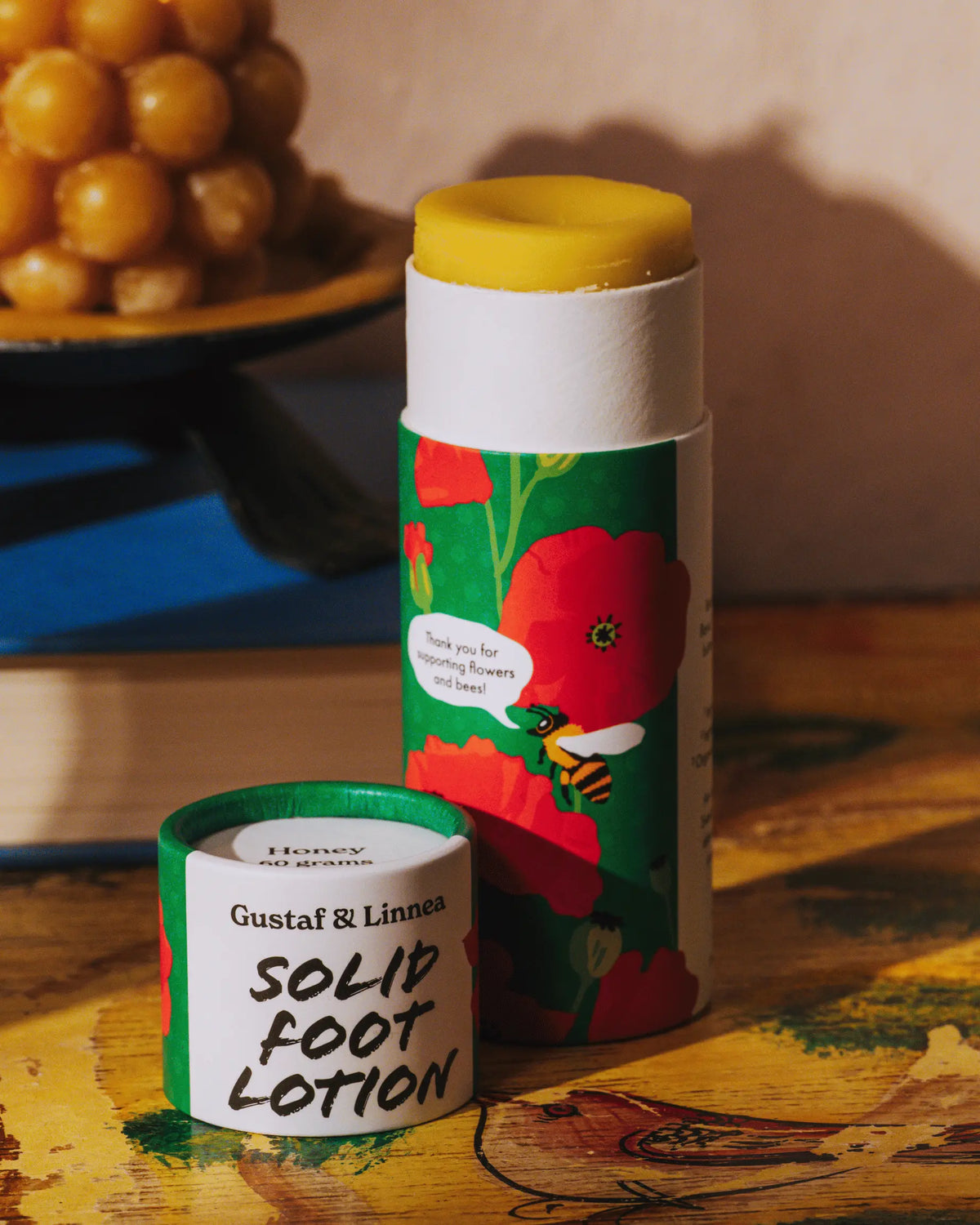
Gustaf & Linnea's natural " Solid foot lotion " contains, among other ingredients, cold-pressed canola oil, beeswax, and shea butter, which nourish and soften dry heels without leaving them greasy.